


Infrastructure That Makes Sites Work
A successful business location depends on more than available land. It requires dependable utilities, efficient transportation, digital connectivity and partners who can help coordinate every element of a project. Brenham and Washington County bring those pieces together, offering industrial properties supported by established infrastructure and direct access to the local officials and utility representatives who can help companies move from site evaluation to operation.
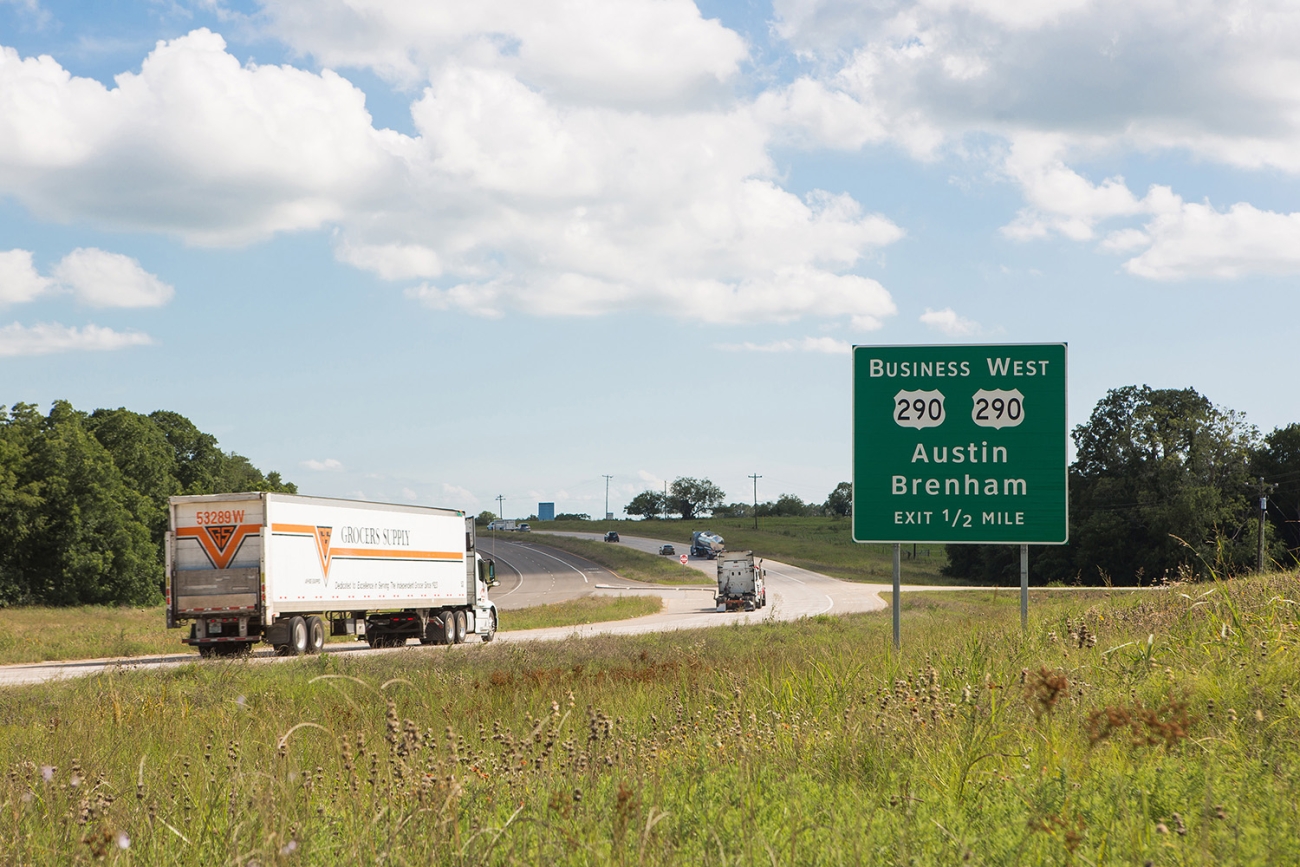
Brenham sits at the intersection of U.S. Highway 290 and State Highway 36, two major routes that connect the community with Houston, Austin, Bryan–College Station and markets throughout Texas. U.S. 290 provides an important east-west connection between Houston and Austin, while State Highway 36 creates a north-south route toward Central Texas, the Gulf Coast and regional freight corridors. TxDOT is also advancing improvements at the U.S. 290–SH 36 interchange to create continuous traffic flow and stronger connectivity between the two highways, further supporting mobility and access for nearby businesses.
Companies locating within Brenham may benefit from the City’s municipally operated utility network. The City of Brenham Public Utilities Department maintains infrastructure and provides electric, natural gas, water and wastewater services within its service area. Because these systems are managed locally, prospective companies can engage directly with utility and development representatives to discuss service requirements, project schedules and potential infrastructure needs. The City’s electric department serves Brenham and portions of Washington County, while other locations in the county may be served by Bluebonnet Electric Cooperative.
Brenham and Washington County offer industrial properties, including two approximately 40-acre sites planned with access to water, natural gas and broadband. Additional sites in a range of sizes can serve advanced food processing, precision manufacturing, biomedical supplies, ag-tech and other operations that need infrastructure-ready land without the costs and constraints of a major metropolitan market.
Highway access gives companies flexible options for moving raw materials and finished products. From Brenham and Washington County, businesses can reach suppliers, customers, ports, energy markets and major manufacturing centers across the Texas Triangle while operating outside the congestion of Houston or Austin. This position is particularly advantageous for companies serving multiple Texas markets from one facility rather than tying their operations to a single metropolitan area.
Brenham and Washington County are approaching infrastructure growth deliberately. Water, wastewater, transportation and utility improvements are being incorporated into long-range planning so new projects can be evaluated against verified conditions and future needs. Companies with substantial electric, water, wastewater or natural gas requirements can engage utility providers early in the site-selection process, helping identify necessary improvements and develop a realistic service plan before major design or construction decisions are made.
Broadband service is an important part of the community’s industrial development strategy. Planned industrial sites include broadband access to support automated production, inventory systems, logistics management and modern communications. Brenham and Washington County are also working to better understand and strengthen connectivity throughout the county, helping ensure that businesses can evaluate service at the individual property level rather than relying only on countywide averages.
Companies selecting a Brenham or Washington County property gain access to a coordinated local team. Brenham | Washington County Economic Development can bring together City and County departments, Bluebonnet Electric Cooperative, transportation partners, property owners, education providers and other resources based on the needs of the project. That means clearer answers, earlier identification of infrastructure requirements and a more direct route from selecting a site to beginning operations.